How to Start Pottery as a Beginner (and Where to Learn in Person)
Handbuilding is the friendliest door into clay — no wheel, no special gear, and a finished piece you can actually use. Here's what a first class looks like, and where to take one around Mena, Arkansas.
The Heirloom Journal
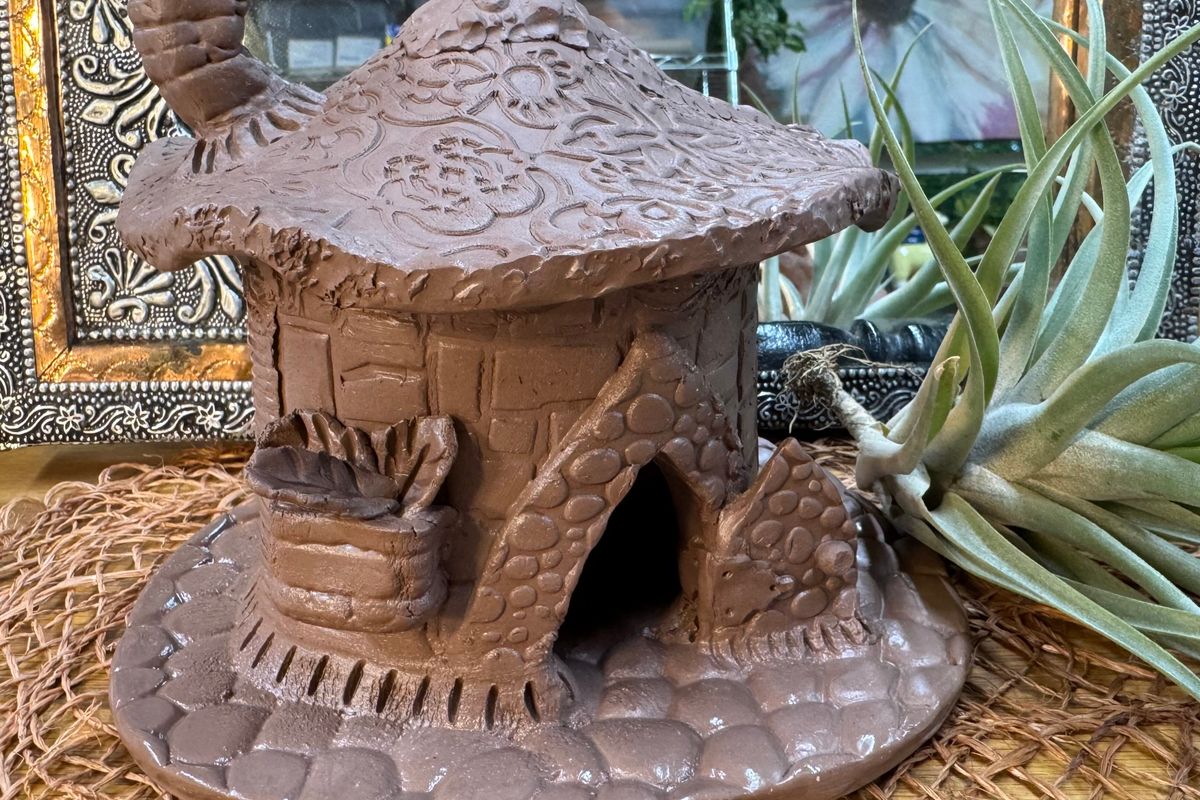
Pottery is having a moment, and it's easy to see why: clay is one of the few crafts where you walk in with nothing and walk out with an object you made from the ground up. But for most beginners the wheel is the scariest part — so it may surprise you that the best way to start is to skip it entirely.
Start with handbuilding, not the wheel
Handbuilding means shaping clay with your hands and simple tools: pinching, rolling coils, and joining flat slabs. It's how humans made pots for thousands of years before wheels existed, and it's far more forgiving at the start. You control every part of the form, you can pause and fix things, and your first pieces come out looking intentional instead of lopsided.
Wheel throwing is wonderful — but it's a skill with a real learning curve, measured in many sessions. Handbuilding gives you a finished, functional piece on your first try, and that's what keeps beginners coming back.
What your first class actually looks like
A good beginner class doesn't start with theory. You sit down, and within minutes you're working the clay. Most beginner courses are built as two sessions: the first is construction — you build your piece, whether that's a bowl, a planter, or something more whimsical — and the second is finishing, where your piece has dried to leather-hard and you carve, texture, and glaze it.
- Session one: build — pinch pots, coils, and slabs become a real object.
- Between sessions: your piece dries to leather-hard.
- Session two: finish — carve details, then glaze for color and a food-safe surface.
- After a final kiln firing, your piece comes home ready to use.
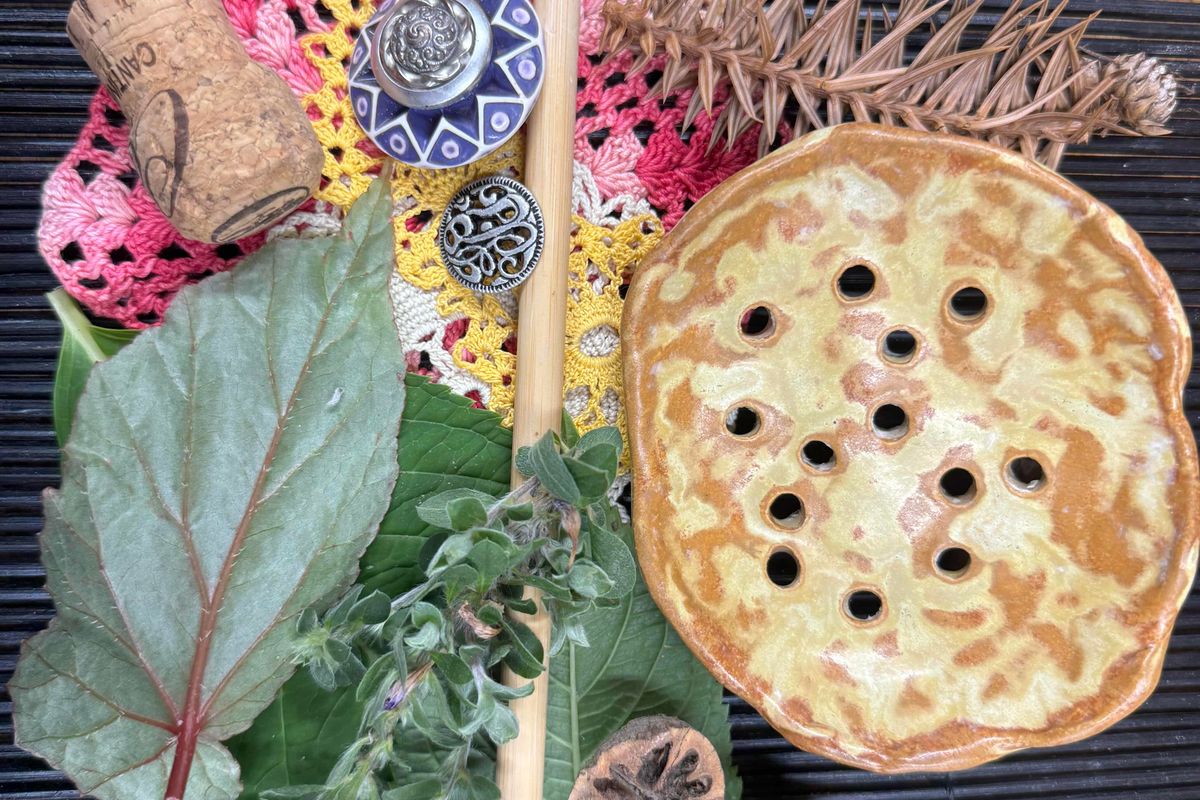
What to bring
Less than you'd think. Most beginner classes provide the clay, tools, and glazes — you bring clothes you don't mind getting muddy and short fingernails if you can manage it. Clay under fingernails is the one universal beginner complaint, and it washes out eventually.
Learning in person around Mena, Arkansas
If you're in the Ouachitas, one of the friendliest places to start is Back to the Mud Pottery in Mena, where Lynn Greenwade teaches handbuilding with stoneware clay. Lynn has been a working artist for decades — many locals know her as "the Toad House Lady" for the whimsical ceramic toad houses she's made for years. She minored in pottery in school, remembers watching salt kilns fire as a child, and has spent over twenty years in Mena showing her work at fine art and craft shows.
Her beginner workshops follow exactly the structure above: small groups, two classes, all materials provided, and a finished glazed piece at the end. Adults have built small fairy houses; kids eight and up have made practical pieces they actually use at home. The setting is her home studio at 306 9th Street in Mena — low-key, welcoming, and mud-friendly.
Whichever class you choose, the advice is the same: pick the class that finishes something. A first piece you can hold — slightly crooked, entirely yours — is worth more than weeks of practicing toward nothing.